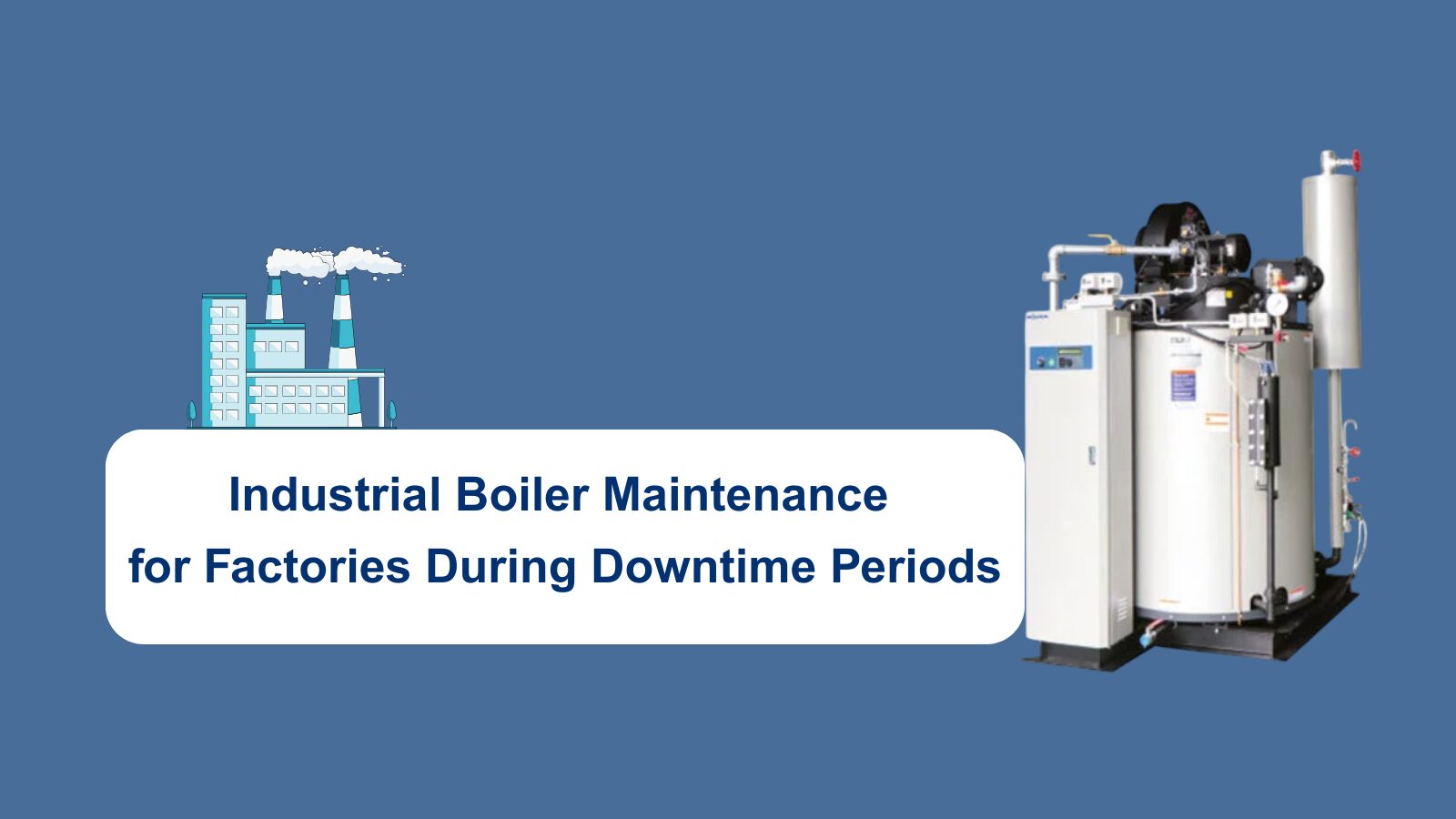
In actual factory operations, industrial boilers do not always run continuously. Many businesses experience periods of shutdown or reduced production load, such as public holidays, Lunar New Year (Tet), low-demand seasons, or temporary suspension of certain production lines for maintenance and equipment upgrades. Particularly in industries such as food processing, textiles, laundry services, and hospitality, steam demand often fluctuates seasonally, making boiler shutdowns more frequent.
However, stopping operations does not mean that equipment can be “left unattended.” Without a proper industrial boiler maintenance process during this period, the risks of corrosion, scale buildup, reduced efficiency, and safety issues upon restart are significantly increased—especially for electric industrial boilers or high-pressure systems.
This article provides businesses with a comprehensive guide, including:
- Risks of not maintaining boilers during downtime
- Appropriate maintenance methods based on shutdown duration (short-term vs. long-term)
- Inspection procedures before restarting to ensure safety
- Practical checklists for plant operation technicians
This is a valuable resource for manufacturing businesses aiming to optimize costs, extend equipment lifespan, and ensure stable operation after each shutdown period.
1. Overview of Industrial Boiler Maintenance During Downtime
1.1. The Role of Industrial Boilers in Manufacturing Plants
Industrial boilers are among the most critical industrial thermal equipment in production lines. The steam generated from boilers is used for heat transfer, sterilization, drying, and machinery operation across many industries. Thanks to their ability to provide stable energy, boilers help ensure product quality and maintain production efficiency.
Common applications include:
- Food & Beverage Industry: sterilization, cooking, steaming, pasteurization → ensures food safety and extends shelf life
- Pharmaceutical Industry: temperature control in drug production → ensures GMP standards
- Textile Industry: dyeing and drying → directly affects color quality and product durability
- Chemical Industry: thermal reactions and distillation → requires precise and stable temperature control
- Laundry & Hospitality Industry: steam supply for laundry systems → ensures cleaning efficiency and energy savings
👉 This shows that when an industrial boiler stops operating, the entire production system may be affected if proper maintenance planning is not in place. Therefore, maintenance is not only a technical requirement but also a strategic factor in operations.
>>> Related article: What is an industrial boiler? Mechanism & applications
1.2. Why Is Maintenance Necessary During Downtime?
During downtime, boilers are still affected by environmental factors such as humidity, oxygen, and temperature. These factors can silently cause damage if not properly controlled. In particular, internal metal surfaces are highly susceptible to corrosion when exposed to moist air.
Without proper maintenance, the following issues may occur:
- Internal metal corrosion → reduces structural durability
- Scale buildup → hinders heat transfer
- Reduced equipment lifespan → increases replacement costs
- Increased repair costs → impacts financial planning
According to technical standards for pressure equipment (TCVN), systems such as industrial boilers must be inspected and maintained periodically before being restarted to ensure safety. This helps businesses minimize unexpected incidents.
>>> Related article: How to properly maintain industrial boilers
1.3. Types of Boilers Requiring Maintenance
Maintenance should be applied to various types of industrial thermal equipment, including:
- Fuel-fired industrial boilers: gas, oil, biomass → require inspection of combustion chambers and fuel systems
- Electric industrial boilers: use heating elements → require control of electrical systems and water quality
- Integrated boiler systems in automated production lines: require synchronization with control systems
In particular, electric industrial boilers require stricter control of water quality and electrical systems, so maintenance procedures must be carried out more carefully. Choosing the right maintenance method helps ensure efficiency and safety during restart.
2. Common Risks of Improper Boiler Maintenance
2.1. Corrosion and Equipment Damage
When industrial boilers are not operating, moisture and oxygen in the air can cause corrosion on metal surfaces. This process occurs silently but can lead to serious damage over time. Areas such as pipelines and combustion chambers are particularly vulnerable.
In addition, accumulated dirt and scale reduce heat transfer efficiency, forcing the boiler to operate at higher capacity to achieve the same temperature.
2.2. Reduced Efficiency and Increased Operating Costs
An industrial boiler that is not properly maintained will consume more fuel upon restart. This increases production costs and reduces business profitability. In the context of rising energy prices, this is a critical factor to consider.
For example:
- A scale layer of just 1mm can reduce heat transfer efficiency by 5–10%
- Fuel consumption increases accordingly
Therefore, maintenance not only protects equipment but also contributes significantly to reducing operating costs.
2.3. Occupational Safety Risks
Industrial boilers are high-pressure equipment, so without proper maintenance, the risk of incidents is very high. These incidents often occur suddenly and are difficult to control without regular inspections.
Risks include:
- Boiler explosions → causing severe damage
- Pressure leaks → affecting operational safety
- Safety valve failure → loss of pressure control
Therefore, periodic maintenance is essential to ensure safety for both the system and operators.
3. Boiler Maintenance Methods During Downtime
3.1. Classification by Downtime Duration
Depending on the duration of shutdown, businesses can choose appropriate maintenance methods. This classification helps avoid applying unsuitable methods that may lead to inefficiency or unnecessary costs.
- Short-term shutdown (< 1 month): wet preservation
- Long-term shutdown (> 1 month): dry preservation
Choosing the right method helps optimize costs and minimize damage risks.
3.2. Dry Preservation Method
Applied when factories are shut down for extended periods, such as during Tet holidays or major maintenance. This method is commonly used in large-scale plants.
Procedure:
- Drain all water from the boiler → prevent corrosion
- Clean scale deposits → improve efficiency
- Dry the system → remove moisture
- Place desiccants → maintain a dry environment
- Seal the boiler → prevent air ingress
Advantages:
- Effective corrosion prevention
- Suitable for long-term protection
3.3. Wet Preservation Method
Applied for short-term shutdowns or standby conditions. This method helps maintain system stability over a short period.
Procedure:
- Clean the system → remove dirt and deposits
- Fill with treated water → ensure water quality
- Deoxygenate → reduce corrosion risk
- Maintain slight pressure → stabilize the system
Advantages:
- Easy to implement
- Suitable for electric industrial boilers
3.4. Comparison of the Two Methods
| Criteria | Dry Preservation | Wet Preservation |
| Downtime duration | Long | Short |
| Corrosion prevention effectiveness | High | Moderate |
| Complexity | Moderate | Low |
| Application | Large-scale plants | Flexible operations |
This comparison table helps businesses easily choose the most suitable method based on their actual operating conditions.
4. Boiler Inspection Procedure Before Restarting
4.1. Overall System Inspection
Before restarting the industrial boiler, it is necessary to inspect the entire system to ensure there are no technical faults. This is a critical step to minimize risks during the startup process.
- Safety valve
- Pressure gauge
- Control system
- Electrical system
4.2. Internal Boiler Inspection
Internal inspection helps identify potential issues at an early stage. Although often overlooked, this step has a significant impact on operational safety.
- Corrosion condition
- Scale buildup
- Piping system
4.3. Feedwater System Inspection
Feedwater plays a crucial role in the performance and lifespan of industrial thermal equipment. If water quality does not meet required standards, the equipment will deteriorate rapidly.
Key parameters to check:
- pH
- Hardness
- TDS (Total Dissolved Solids)
4.4. Test Run and Safety Verification
After completing inspections, a test run should be conducted to ensure all parameters are stable. This is the final verification step before full-scale operation.
- No-load test run
- Gradual load increase
- Monitoring operational parameters
5. Optimal Boiler Maintenance Solutions for Businesses (Proposed by Maruse Engineering)
5.1. Maintenance Planning Based on Production Cycles
Businesses should develop maintenance plans aligned with their production cycles to avoid operational disruptions. This helps optimize both time and operating costs.
5.2. Utilizing Professional Maintenance Services
Partnering with professional service providers ensures that maintenance procedures meet technical standards. At the same time, businesses can minimize risks and reduce long-term costs.
5.3. Applying Technology in Boiler Management
Technologies such as IoT enable real-time monitoring of equipment. This allows businesses to detect issues early and respond promptly.
5.4. Optimizing Long-Term Operating Costs
Proper maintenance helps reduce energy consumption and extend equipment lifespan. This is a key factor in improving investment efficiency.
>>> Related article: Daily/Weekly/Monthly Boiler Maintenance Checklist
Conclusion
Maintaining industrial boilers during downtime is not only a technical requirement but also a strategic approach to ensure safety, optimize costs, and sustain long-term production efficiency. Selecting the right maintenance method, conducting thorough inspections before restarting, and applying modern technologies will help businesses minimize risks and enhance operational performance.
Contact Maruse Engineering for consultation on the most suitable boiler solutions for your factory.