
1. Overview of Industrial Boilers
1.1. What is an industrial boiler?
Industrial boilers (also known as industrial steam boilers) are industrial thermal equipment designed to generate steam or hot water at specific pressure and temperature levels, supplying heat directly to production processes. Steam serves as an efficient, stable, and safe heat transfer medium, which is why boilers are present in most modern factories.
As businesses increasingly focus on energy efficiency, long-term operating costs, and environmental standards, selecting the right type of boiler not only helps optimize costs but also enhances competitiveness and ensures compliance with legal regulations.
1.2. The role of boilers in manufacturing industries
Industrial boilers are the “heart” of many production lines:
- Food & beverages: sterilization, heating, cooking, steaming, CIP/SIP.
- Pharmaceuticals & cosmetics: clean steam generation, equipment sterilization, precise temperature control.
- Textiles & industrial laundry: drying, pressing, ironing, fabric finishing.
- Chemicals: thermal reactions, distillation, tank heating.
- Hotels & hospitals: centralized hot water supply, laundry services, industrial kitchens.
2. Classification of Common Industrial Boiler Types
For businesses that are newly approaching or investing in industrial boilers for the first time, boiler classification is typically based on the energy source used to generate heat. Understanding the core characteristics of each type helps businesses avoid choosing the wrong technology, which could lead to unnecessary investment and operating costs later on.
Currently, in industrial manufacturing in Vietnam, the three most common types of boilers include:
- Electric industrial boilers
- Oil-fired industrial boilers
- Gas-fired industrial boilers
2.1. Electric industrial boilers
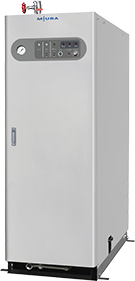
Electric industrial boilers are a type of industrial thermal equipment that use electricity to heat water and generate steam. Their operating principle is similar to a “large-capacity electric kettle,” but they are designed for industrial environments with much higher pressure and temperature requirements.
2.2. Oil-fired industrial boilers
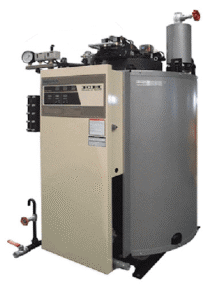
Oil-fired industrial boilers generate steam by burning liquid fuels (typically DO or FO oil) in a combustion chamber, then transferring the heat to water.
This is a traditional type of industrial boiler that was widely used before gas and electricity became as common as they are today.
2.3. Gas-fired industrial boilers
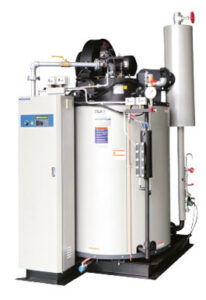
Gas-fired boilers use LPG, CNG, or natural gas and are considered cleaner than oil-fired boilers, with competitive fuel costs and high efficiency, making them suitable for industrial zones with existing gas pipeline infrastructure.
3. Detailed Comparison of “Electric Boilers – Oil-Fired Boilers – Gas-Fired Boilers”
Before diving into each detailed analysis, the comparison table below helps you get a quick, at-a-glance view of the core differences between electric, oil-fired, and gas-fired boilers in just one read. From there, businesses can quickly identify the industrial boiler type that best fits their operating needs, cost structure, and environmental requirements.
| Comparison criteria | Electric industrial boilers | Oil-fired industrial boilers | Gas-fired industrial boilers |
| Operating principle | Heating elements → water boils → steam generation | Burn DO/FO oil in a combustion chamber → heat transfer through tubes/shell | Burn gas (LPG/CNG) → efficient heat transfer |
| How heat is generated | No combustion; heat is generated directly from electricity | Liquid-fuel combustion | Gaseous-fuel combustion |
| Thermal efficiency | ⭐⭐⭐⭐⭐ Very high, with minimal heat loss | ⭐⭐⭐⭐ Good, but depends on fuel quality & burner/combustion condition | ⭐⭐⭐⭐–⭐⭐⭐⭐⭐ High and stable |
| Steam output capability | Stable, suitable for small–medium loads | Strong, suitable for high loads | Stable, suitable for continuous operation |
| Start-up time | Very fast | Slower due to combustion chamber warm-up | Fast |
| Upfront investment cost | Low – Medium | High | High |
| Operating cost | Depends on electricity tariffs; can be high | Depends on oil prices | Depends on gas prices |
| Long-term cost optimization (TCO) | Best for small–medium scale | Best for high-load operations | Best for continuous operation |
| Environmental emissions | No smoke/dust, no on-site CO₂ emissions | Higher emissions; exhaust gas treatment may be required | Lower emissions than oil |
| Safety requirements | Simple; mainly electrical safety | High (fire/explosion risks, oil storage) | High (gas leakage, pressure safety) |
| Operational complexity | Low | High | Medium |
| Maintenance | Simple, fewer mechanical parts | Complex, multiple maintenance items | Medium |
| Equipment lifespan | Stable if power supply is reliable | Long if maintained to standard | Long and stable |
| Beginner-friendliness | ⭐⭐⭐⭐ | ⭐⭐ | ⭐⭐⭐ |
Overall remarks:
- Electric industrial boilers stand out for being simple, clean, and easy to operate, making them ideal for first-time investors or industries that require clean steam; however, electricity costs should be carefully considered when scaling up capacity.
- Oil-fired industrial boilers are suitable for factories with high and stable steam demand, but they come with higher requirements for maintenance, safety, and environmental control.
- Gas-fired industrial boilers offer a balanced solution across efficiency, cost, and environmental impact, and are especially effective for businesses located in industrial zones with existing gas infrastructure.
- Boiler selection should not rely only on upfront investment cost; businesses should also consider total cost of ownership (TCO), available infrastructure, and long-term development plans.
4. Pros and Cons of Each Boiler Type
After understanding the operating principles and key comparison criteria, businesses should clearly recognize the advantages and limitations of each industrial boiler type in real-world use. A correct assessment helps businesses choose a solution that matches production scale, infrastructure conditions, and long-term operational goals, rather than relying only on upfront investment cost.
4.1. Electric industrial boilers
Advantages:
Electric industrial boilers offer their biggest advantage in very high heat-generation efficiency and fast start-up. Because they use direct electric heating elements, heat loss during operation is minimal, enabling stable and precise steam generation. In addition, electric boilers run quietly and do not produce smoke, dust, or on-site exhaust emissions, making them especially suitable for plants with strict environmental requirements and high standards for steam cleanliness. Their simple structure also makes maintenance and servicing easier than for fuel-fired industrial steam boilers.
Disadvantages:
However, a key limitation of electric industrial boilers is their strong dependence on the plant’s available electrical capacity. When steam demand increases or the boiler runs at high load for extended periods, electricity costs can become a critical factor. Therefore, this boiler type is often more suitable for small-to-medium businesses or industries that require clean and stable steam, such as pharmaceuticals, laboratories, premium food processing, and medium-scale industrial laundry facilities.
4.2. Oil-fired industrial boilers
Advantages:
Oil-fired industrial boilers are highly regarded for their ability to deliver large capacity and stable operation in continuous production lines. By using liquid fuels such as DO or FO oil, this type of industrial steam boiler does not rely on gas infrastructure, allowing businesses to be more independent in areas far from industrial zones or where gas supply is not yet available. With a suitable design, oil-fired boilers can meet high steam demand over long periods, especially in heavy manufacturing industries.
Disadvantages:
Nevertheless, the main drawbacks of oil-fired industrial boilers relate to environmental impact and maintenance. Oil combustion produces exhaust emissions and soot, requiring businesses to invest in flue-gas treatment systems and comply with strict environmental regulations. In addition, operating and maintaining the combustion chamber, burner, and fuel supply system is more complex than for electric boilers. For these reasons, oil-fired boilers are often selected by large textile factories, chemical manufacturers, or facilities located in remote areas.
4.3. Gas-fired industrial boilers
Advantages:
Gas-fired industrial boilers are considered a balanced solution across efficiency, operating costs, and environmental factors. By using gaseous fuels such as LPG or CNG, these boilers achieve high and stable efficiency while producing significantly lower emissions than oil-fired boilers. Under continuous operation, gas fuel costs often provide an economic advantage, especially for businesses with large output and consistent steam demand.
Disadvantages:
However, gas-fired industrial boilers require standardized gas infrastructure and strict compliance with fire and explosion safety regulations. Gas leakage control, valve systems, and safety sensors are mandatory during operation. Under these conditions, gas-fired boilers are particularly suitable for food and beverage production, hotels, hospitals, and factories located in concentrated industrial zones where gas infrastructure has been built in a coordinated manner.
>> Related article: Periodic Industrial Boiler Maintenance Checklist for Factories
5. Criteria for Choosing the Right Industrial Boiler
Choosing an industrial boiler is not simply about comparing electric, oil-fired, and gas-fired boilers; it is a comprehensive decision that involves production needs, long-term costs, infrastructure conditions, and the company’s development strategy. If the evaluation is not thorough, businesses can easily end up “buying the right equipment at the wrong time or at the wrong scale.”
5.1. Define steam demand for production
When selecting an industrial boiler, businesses should clearly define the actual steam demand of the production line, including steam flow rate, pressure, and operating hours. Choosing the right capacity helps ensure stable operation, avoids unnecessary capital waste, and prevents overload conditions that can reduce equipment lifespan.
5.2. Evaluate investment cost and total cost of ownership (TCO)
Instead of focusing only on the initial purchase price, businesses should consider the total cost of ownership (TCO), including fuel/energy cost, maintenance, and operation. While electric industrial boilers offer advantages in simpler maintenance and lower upfront investment, gas or oil-fired boilers may optimize long-term costs when operating at larger scale.
5.3. Environmental factors and legal requirements
Environmental standards are increasingly important for manufacturing businesses. Electric industrial boilers produce almost no on-site emissions, while gas-fired boilers typically generate lower emissions than oil-fired boilers. Selecting the right type of industrial steam boiler helps businesses comply with regulations and reduces the risk of future costs related to environmental treatment.
5.4. Infrastructure conditions and scalability
Available infrastructure such as electrical capacity, gas supply systems, and installation space directly affects boiler selection. In addition, businesses should consider future scalability to avoid having to replace the entire system when production expands.
>> Related article: 7 Key Factors to Check Before Investing in a Boiler for Your Factory
6. Industrial Boiler Applications by Industry
- Food & beverages: gas or electric boilers for clean, stable steam.
- Pharmaceuticals: prioritize electric industrial boilers to control steam quality.
- Textiles & industrial laundry: gas/oil boilers for high loads and continuous operation.
- Chemicals: oil/gas boilers for high heat and stable operation.
- Hotels & hospitals: gas or electric boilers for centralized hot water.
7. Conclusion
There is no single boiler type that is “best for every business.” The right industrial boiler should be selected based on production needs, total lifecycle cost, environmental standards, and available infrastructure.
- Businesses that need a clean, stable solution → electric industrial boilers.
- Large-scale factories with gas infrastructure → gas-fired industrial boilers.
- Areas without gas infrastructure that require high loads → oil-fired industrial boilers.
👉 Contact Maruse Engineering for consultation on the most suitable industrial boiler solution for your production model, optimizing efficiency, cost, and long-term operational safety.