
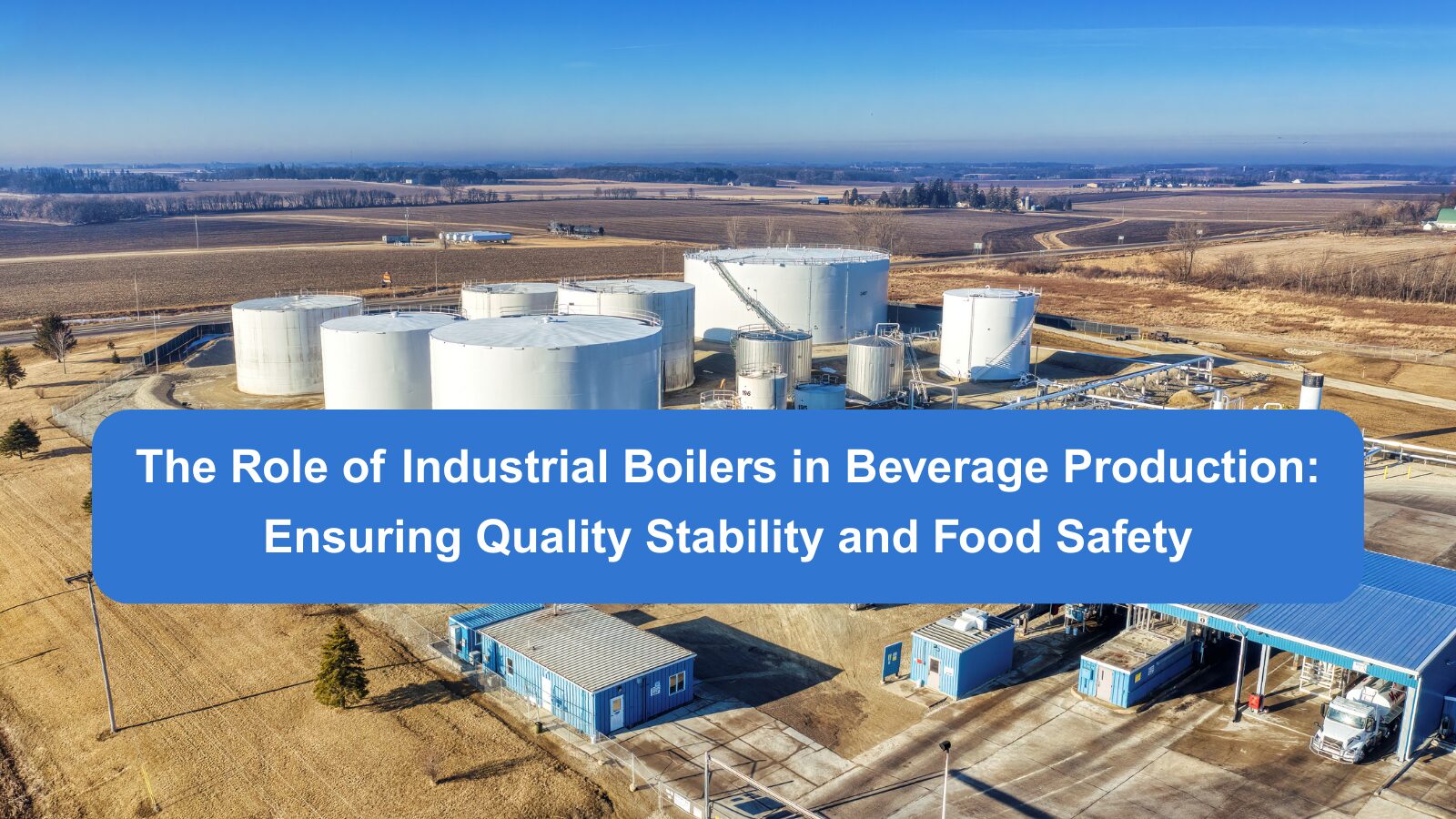
1. Overview of Industrial Boilers in the Beverage Manufacturing Industry
In modern beverage manufacturing plants—from bottled drinking water, soft drinks, beer, and dairy products to fermented beverages—industrial boilers are considered the “central heat source” of the entire production line. Beyond simply generating steam, boiler systems play a decisive role in ensuring product quality stability, food safety and hygiene, and overall plant operating efficiency.
For buyers, purchasing departments, or technical management teams, the key question is no longer “whether an industrial boiler is necessary”, but rather “which boiler system should be selected to ensure stable, safe, and long-term production.” This is also why industrial boiler systems and industrial thermal equipment are increasingly being considered from a strategic perspective, rather than merely as equipment investments.
1.1. What is an industrial boiler?
Industrial boilers are heat-generating systems that use energy sources such as electricity, gas, or oil to heat water and produce steam at specified pressure and temperature levels. This steam is then distributed to production processes that require heat, such as heating, pasteurization, sterilization, or equipment cleaning.
In the beverage industry, industrial boilers are commonly used in the following forms:
- Industrial electric boilers: clean operation, no on-site emissions
- Industrial gas boilers: high efficiency, flexible capacity control
- Industrial oil-fired boilers: suitable for areas with unstable gas supply
Each type has its own advantages and limitations, but all must meet the same fundamental requirements: stable, clean, and safe steam generation for food production.
1.2. Why is the beverage industry particularly dependent on steam?
Unlike many mechanical or materials manufacturing sectors, the beverage industry has unique characteristics:
- Products are consumed directly by end users
- Extremely stringent hygiene and food safety requirements
- Product quality is highly sensitive to temperature, time, and thermal stability
Even slight temperature instability or insufficient pasteurization can alter product flavor, reduce shelf life, or in severe cases require product recalls. Therefore, the industrial boiler is not merely a supporting system but a fundamental element in safeguarding brand quality.
2. The Role of Industrial Boilers in Beverage Production Lines
2.1. Providing stable heat for processing operations
In beverage production, steam is used across multiple process stages:
- Heating water and raw material solutions
- Cooking, boiling, dissolving, or concentrating
- Indirect heating via heat exchangers
Industrial boilers help maintain stable temperatures throughout the production process. When heat is well controlled:
- Product flavor remains consistent across batches
- Overheating or insufficient heating is avoided
- Defect rates and raw material losses are reduced
For buyers, these benefits translate directly into both economic and quality advantages.
2.2. Ensuring effective pasteurization and sterilization
Pasteurization and sterilization are mandatory processes in the beverage industry. Steam generated by industrial boilers is used to:
- Eliminate harmful microorganisms
- Extend product shelf life
- Ensure compliance with food safety standards
If steam pressure or temperature is unstable, pasteurization processes may fail to meet required standards. This poses significant risks to manufacturers, especially during inspections or quality audits.
2.3. Supporting CIP/SIP systems – the foundation of plant hygiene
In modern beverage plants, CIP (Cleaning In Place) and SIP (Sterilization In Place) systems are nearly mandatory standards. Steam from industrial boilers is used to:
- Clean pipelines, tanks, and processing equipment
- Sterilize systems without disassembly
- Ensure a consistently clean and safe production environment
A well-designed industrial boiler system enables stable CIP/SIP operations, saves time, and reduces reliance on chemical cleaning agents.
3. Industrial Boilers and the Food Safety & Hygiene Challenge
3.1. Steam quality – a critical factor
In the beverage industry, simply “having steam” is not sufficient. Buyers typically pay close attention to:
- Steam dryness
- The ability to control pressure and temperature
- The risk of oil, scale, or impurity contamination
A properly designed industrial thermal system helps generate clean steam that meets the strict hygiene requirements of food and beverage processes.
3.2. Reducing cross-contamination and process deviations
When an industrial boiler operates unstably, several risks may arise:
- Insufficient pasteurization → unsafe products
- Inadequate cleaning temperature → residual microorganisms
- Scale buildup in the system → reduced efficiency and difficult hygiene control
Conversely, a well-designed and properly maintained boiler system enables enterprises to proactively prevent risks rather than reacting to issues after they occur.
4. Selecting the Right Industrial Boiler for Beverage Plants
4.1. Industrial electric boilers – a clean solution for production environments
Industrial electric boilers are increasingly favored by beverage manufacturers thanks to:
- No on-site combustion emissions
- Easy and precise temperature control
- Suitability for areas with strict hygiene and noise requirements
This solution is particularly suitable for medium-scale plants, urban locations, or production lines requiring a high level of cleanliness.
4.2. Industrial gas boilers – high efficiency and flexibility
Industrial gas boilers offer the following advantages:
- High steam generation efficiency
- Fast response time
- Suitable for continuous, high-capacity production lines
For large-scale soft drink, beer, or dairy plants, this is a common choice that balances cost and performance.
4.3. Industrial oil-fired boilers – a flexible alternative
In certain regions, industrial oil-fired boilers remain a suitable option when:
- Gas supply is unstable or unavailable
- Large capacity and continuous operation are required
However, environmental impact and long-term fuel costs should be carefully considered when selecting this option.
>>> Related article: Comparison of “electric boilers – oil-fired boilers – gas-fired boilers”: Choosing the right solution for your business
5. Long-Term Benefits of Investing in the Right Industrial Boiler System
5.1. Stable production and cost optimization
A properly selected industrial boiler system helps to:
- Reduce downtime caused by thermal failures
- Optimize energy consumption
- Extend the lifespan of equipment across the production line
For buyers, these factors directly impact TCO – Total Cost of Ownership.
5.2. Enhancing credibility and audit readiness
Beverage plants are regularly subject to:
- Food safety and hygiene inspections
- Internal and third-party audits
- Assessments by partners and customers
A well-engineered industrial boiler system enables businesses to confidently meet these requirements.
>> Related article: Industrial Boiler Maintenance Checklist – “Daily/ Weekly/ Monthly”
6. Recommendations for Selecting Industrial Boiler Solutions for the Beverage Industry
Before making an investment, businesses should:
- Clearly analyze heat demand for each production stage
- Define applicable hygiene requirements and standards
- Select partners with proven experience in the food and beverage industry
Choosing the right supplier not only ensures proper equipment installation but also delivers comprehensive solution consulting, stable operation, and long-term support.
Conclusion
In beverage manufacturing, industrial boilers are not merely heat-generating equipment; they are the foundation for ensuring product quality, food safety, and operational efficiency. Selecting the right industrial electric boiler, industrial gas boiler, or industrial oil-fired boiler enables businesses to reduce risks, optimize costs, and achieve sustainable growth.
👉 Contact Maruse Engineering for professional consultation on industrial boiler solutions tailored to your beverage production facility—from system design and equipment selection to long-term operation and maintenance.