1. ISO 45001 and Its Role in Industrial Boiler Systems
As businesses place increasing emphasis on sustainable development and employee well-being, creating a safe working environment has become one of their top priorities. This is especially important in facilities that operate industrial boilers, where high pressure, elevated temperatures, and large-scale energy systems present significant workplace hazards.
ISO 45001 is the international standard for Occupational Health and Safety Management Systems (OH&S). It is designed to help organizations proactively prevent workplace accidents and minimize operational risks during production. Beyond ensuring legal compliance, the standard also promotes the development of a strong safety culture throughout the organization.
For industrial boiler systems, ISO 45001 does not specify which type of equipment should be used or how the system should be designed. Instead, it directly influences how organizations identify risks, train personnel, establish operating procedures, and perform equipment maintenance.
In practice, many boiler-related incidents are not caused by equipment failure but by inadequate management procedures or human error. This is why ISO 45001 is increasingly being adopted by companies in the food and beverage, pharmaceutical, chemical, textile, and hospitality industries.
2. Why Are Industrial Boiler Systems Considered High-Risk Areas?
2.1 Operating Characteristics of Industrial Boiler Systems
An industrial boiler converts energy from fuel or electricity into steam for industrial processes. The generated steam is then supplied to various production equipment for heating, drying, sterilization, or powering manufacturing processes.
Because boilers operate continuously under high pressure and high temperatures, they are classified as equipment subject to stringent occupational safety requirements. Even a minor malfunction can impact the entire facility, resulting in substantial property damage and production downtime.
Furthermore, many manufacturers operate their steam systems 24/7 to meet production demands. As a result, effective risk control and preventive maintenance have become even more critical.
2.2 Common Hazards Associated with Industrial Boilers
Boiler Explosion Hazards
A boiler explosion is one of the most serious accidents that can occur in an industrial facility. When operating pressure exceeds the design limit or safety devices fail to function properly, the accumulated energy inside the boiler can be released suddenly, causing catastrophic consequences.
In addition to damaging equipment, boiler explosions can affect surrounding production areas and pose a direct threat to workers’ lives.
Thermal Burn Hazards
Saturated steam contains a significant amount of thermal energy. Operators may suffer severe burns if they come into direct contact with hot steam or inadequately insulated metal surfaces.
This is one of the most common workplace accidents in facilities where maintenance and operating procedures have not been properly standardized.
Electrical Hazards
For industrial electric boilers, the system relies on high electrical power to generate heat. Without regular inspections, issues such as electrical leakage, short circuits, or overloads may occur, posing serious risks to operators.
Chemical Hazards
To prevent scale buildup and corrosion, boiler systems typically use water treatment chemicals. Improper handling or storage of these chemicals can negatively affect both workers’ health and the workplace environment.
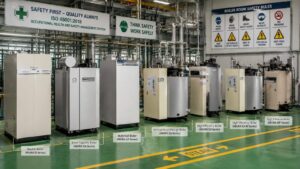
2.3 Industries Most Affected by Boiler System Safety
Food and Beverage Industry
In the food industry, steam is used for cooking, steaming, pasteurization, and sterilization. Steam quality and system stability directly affect the quality of the final product.
Pharmaceutical Industry
Pharmaceutical manufacturing facilities typically require clean steam that meets strict standards to ensure product quality and prevent contamination.
Chemical Industry
Steam plays a vital role in heating processes, chemical reactions, and distillation. Therefore, any boiler-related failure can disrupt the entire production line.
Textile Industry
Industrial boilers are widely used in fabric dyeing, heat setting, and drying processes. A stable steam supply helps improve product quality and reduce defect rates.
Industrial Laundry Services
Hotels, hospitals, and commercial laundry facilities rely heavily on steam to operate dryers and steam ironing systems.
Hotels and Hospitals
In addition to supporting laundry operations, steam systems also provide centralized hot water for daily operations. Ensuring system safety and reliability is an essential requirement for these facilities.
>>> Related Articles:
- How to Calculate the Right Boiler Capacity for Different Manufacturing Industries
- Boiler Applications in the Food Industry: Standards & Operational Efficiency
3. What Does ISO 45001 Require for Industrial Boiler Systems?
3.1 Periodic Risk Assessment and Hazard Identification
ISO 45001 requires businesses to proactively identify hazards instead of only responding after incidents have occurred. This is an important difference between modern safety management and traditional management methods.
For industrial boilers, businesses need to regularly assess:
- Operating pressure
- Operating temperature
- Water supply system
- Feedwater quality
- Measuring devices
- Electrical system
- Pipelines and safety valves
Periodic assessments help detect abnormal signs early, thereby significantly reducing the risk of accidents.
3.2 Establishing Standard Operating Procedures (SOPs)
A modern equipment system cannot operate effectively without clear operating procedures. Therefore, ISO 45001 requires businesses to establish standard procedures and ensure that personnel strictly comply with them.
These procedures not only help reduce operational errors but also provide a foundation for effectively training new employees.
Startup Procedure
This includes checking the entire system before operation to ensure that all equipment is functioning properly.
Operating Procedure
Operators need to fully record operating parameters in order to promptly detect abnormal signs.
Shutdown Procedure
Proper boiler shutdown helps reduce thermal shock and extend equipment service life.
Emergency Response Procedure
This is a particularly important element that helps minimize damage when unexpected incidents occur.
3.3 Operator Training
People are always the central element of any safety management system. Even when a business invests in modern equipment, accidents can still occur if operators lack knowledge or become complacent.
ISO 45001 requires businesses to organize periodic training, evaluate competency, and conduct emergency response drills. This helps improve safety awareness and minimize errors during operation.
4. How Does ISO 45001 Affect Boiler Maintenance?
4.1 Shifting from Corrective Maintenance to Preventive Maintenance
One of the biggest changes brought about by ISO 45001 is the mindset of “prevention before incidents occur.”
Instead of waiting for equipment to fail before repairing it, businesses establish periodic inspection plans to detect abnormal signs early. This not only helps ensure safety but also significantly reduces operating costs.
4.2 Items That Need Periodic Inspection
Components such as safety valves, pressure gauges, temperature sensors, and water supply systems need to be inspected regularly.
For industrial electric boilers, businesses also need to pay attention to heating elements, control panels, and overload protection devices to ensure stable system operation.
4.3 Maintenance Record Management
Maintaining complete maintenance records not only supports ISO audits but also helps businesses build an operational history of their equipment.
Through this data, businesses can analyze the causes of incidents, predict failures, and plan investments more effectively.
>>> Related Article: Industrial Boiler Maintenance Checklist by Day, Week, and Month
5. ISO 45001 Promotes the Digitalization of Boiler Management
In the context of rapid digital transformation, many businesses have combined ISO 45001 with modern monitoring technologies to improve management efficiency.
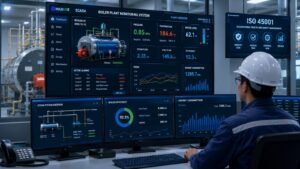
Through IoT, PLC, or SCADA systems, operating parameters can be monitored in real time. This helps businesses detect abnormal signs early before incidents occur.
In addition, Predictive Maintenance technology is becoming a new trend in the field of industrial thermal equipment. Instead of performing maintenance according to a fixed schedule, the system predicts when maintenance is needed based on actual operating data.
As a result, businesses can reduce maintenance costs while increasing the reliability of their steam systems.
6. Benefits of Combining ISO 45001 with Modern Industrial Boiler Systems
Applying ISO 45001 brings many benefits that go far beyond occupational safety alone.
Businesses can significantly reduce workplace accidents, improve production stability, and extend equipment service life.
At the same time, businesses with well-structured safety management systems are often evaluated more highly when participating in global supply chains, especially in the food, pharmaceutical, and chemical industries.
In the long term, reducing downtime and optimizing maintenance costs will bring clear economic benefits to businesses.
7. Maruse Engineering Supports Businesses in Building Safe Boiler Systems
As a company specializing in providing industrial boiler solutions in Vietnam, Maruse Engineering understands that production efficiency must always go hand in hand with safety.
We not only provide equipment but also support businesses in establishing operating procedures, training personnel, and optimizing steam systems in line with international standards.
From projects in the food, beverage, and pharmaceutical industries to the chemical and textile sectors, Maruse Engineering always aims to help customers own stable, energy-efficient, and safe steam systems for the long term.
Conclusion
ISO 45001 is not only a safety management standard but also a tool that helps businesses improve risk management capabilities for industrial boiler systems. From hazard identification, operating procedure development, and personnel training to maintenance and equipment digitalization, all contribute to creating a safer and more efficient working environment.
As occupational safety and sustainable development requirements become increasingly stringent, applying ISO 45001 together with a modern industrial boiler system will help businesses enhance their competitiveness and be ready to meet the requirements of both domestic and international customers.
Contact Maruse Engineering today for consultation on the most suitable boiler solution for your factory, helping optimize operational efficiency and improve safety levels in line with ISO 45001.