As global supply chains increasingly prioritize quality, safety, and sustainable development, Factory Audits have become an almost mandatory assessment step for manufacturing companies seeking to become suppliers to major domestic and international corporations. Not only food, beverage, and pharmaceutical companies, but also businesses in the chemical, textile, industrial laundry, and hospitality sectors regularly undergo these audits to demonstrate the stable operational capabilities of their factories.
When discussing Factory Audits, many companies tend to focus on production processes or quality management systems such as ISO 9001, ISO 22000, or FSSC 22000. However, in practice, the steam system is also one of the areas examined very closely by auditors. It is an important energy source used in many processes such as heating, sterilization, drying, cooking, steaming, and supplying heat to production lines. Even minor instability in the steam system can directly affect product quality, production efficiency, fuel consumption, and the company’s ability to meet customer requirements.
For companies currently using industrial boilers, industrial electric boilers, industrial steam boilers, or other industrial thermal equipment, understanding what auditors will inspect helps them proactively prepare documentation, control risks, and minimize non-conformities (NCs) during the assessment process.
The following article will help companies clearly understand what a Factory Audit is, why steam systems are always included in the inspection checklist, and which important items should be prepared to successfully pass factory audits conducted by customers or certification bodies.
1. What is a Factory Audit? Why Is the Steam System Always Inspected?
1.1 What is a Factory Audit?
A Factory Audit is a comprehensive assessment of a factory’s operational capabilities to verify that the company can manufacture products that meet requirements related to quality, safety, environmental performance, and supply chain stability. The audit may be conducted by customers, parent companies, certification bodies, or independent audit organizations before a contract is signed or while an ongoing business relationship is being maintained.
Contrary to what many people assume, a Factory Audit does not only assess the final product. It also reviews the company’s entire management system, including:
- Factory conditions.
- Production processes.
- Quality management systems.
- Equipment maintenance activities.
- Occupational safety.
- Energy management.
- Utility systems such as electricity, compressed air, and steam systems.
For export-oriented factories or suppliers to foreign-invested enterprises, Factory Audit results also serve as a basis for customers to evaluate supplier reliability. A successful audit not only helps a company maintain orders but also creates a competitive advantage when participating in global supply chains.
Today, Factory Audits are commonly included in various assessment programs, such as:
- Customer Supplier Audits.
- GMP Audits for the food and pharmaceutical industries.
- FSSC 22000 Audits.
- ISO 9001 Surveillance Audits.
- ESG Audits.
- Social Compliance Audits.
- Energy Audits or Sustainability Audits conducted by multinational corporations.
Although the objectives of each program may differ, they all aim to confirm that the company operates a stable production system, can control risks, and continuously improves its operations.
1.2 Why Is the Steam System Always Included in a Factory Audit?
In most manufacturing factories, the steam system is considered the “heart” of many production processes. While electricity powers machinery, steam is an indispensable heat source for continuous production operations.
A stable industrial boiler system provides many benefits, including:
- Maintaining stable production temperatures.
- Ensuring consistent product quality.
- Reducing fuel consumption.
- Reducing production downtime.
- Minimizing equipment failures.
Conversely, if the steam system experiences unstable pressure, wet steam, heat loss, or inadequate feedwater quality, the entire production line may be affected. This not only increases operating costs but also makes it more difficult for the company to meet customer standards during a Factory Audit.
For this reason, auditors often consider the steam system one of the clearest indicators of a company’s technical management capabilities. A well-designed and properly operated system demonstrates that the company can control its production processes in a systematic and sustainable manner.
>>> Related article: Industrial Boiler Safety Standards: ISO, JIS, and Vietnamese Regulations
1.3 Industries Where Steam Systems Are Subject to Particularly Detailed Inspections
Not all industries are assessed at the same level. In sectors where steam is used directly in production or can affect the quality of finished products, auditors will conduct a much more detailed evaluation.
Food and Beverage Industry
In the food industry, steam is used for steaming food, sterilization, heating, cooking raw materials, and CIP (Cleaning In Place).
Auditors pay particular attention to steam quality, feedwater sources, boiler water treatment chemicals, and the ability to prevent product contamination. These topics are also commonly addressed in food safety management programs such as GMP, HACCP, and FSSC 22000.
Pharmaceutical Industry
Requirements are even stricter in pharmaceutical factories. Steam used in production must meet standards appropriate to its intended purpose, especially in equipment sterilization or sterile drug manufacturing processes. Auditors will inspect steam quality control, maintenance procedures, and calibration records for related equipment.
Chemical Industry
In the chemical industry, steam is used to heat storage tanks, support chemical reactions, and maintain pipeline temperatures. If steam pressure or temperature fluctuates significantly, reaction quality may be affected, increasing the risk of product quality deviations.
Textile and Industrial Laundry Industry
The steam system determines the efficiency of processes such as drying, heat pressing, steam ironing, and industrial washing.
For factories with high steam consumption, auditors often also evaluate energy-saving capabilities through steam trap maintenance, pipeline insulation, and steam leak control.
Hotels, Hospitals, and Service Facilities
Large hotels, hospitals, and laundry centers using industrial electric boilers or industrial steam boilers must also ensure that their systems operate safely and reliably and comply with pressure equipment inspection requirements. Although these systems may be smaller than those used in manufacturing factories, operating records, maintenance, and safety remain important criteria in internal audits or customer assessments.
1.4 New Trends in Factory Audits: Evaluating Not Only Safety but Also Energy Efficiency
While Factory Audits previously focused mainly on product quality and operational safety, in recent years many international companies have expanded the scope of their assessments to include factors related to energy efficiency and sustainable development.
For steam systems, auditors not only examine whether the industrial boiler operates safely, but also pay attention to indicators such as:
- Steam generation efficiency.
- Fuel consumption.
- Condensate recovery rate.
- Condition of pipeline insulation.
- Steam Trap operating efficiency.
- Greenhouse gas emissions associated with steam generation.
This reflects the green manufacturing trend being adopted by many multinational corporations to reduce operating costs and meet carbon reduction commitments. For Vietnamese companies participating in global supply chains, proper investment in industrial thermal equipment not only helps them pass Factory Audits but also improves competitiveness and creates a foundation for long-term sustainable development.
>>> Related article: How Does ISO 45001 Affect Industrial Boiler Systems?
2. What Does a Factory Audit Inspect in an Industrial Boiler System?
After reviewing the factory as a whole, the auditor will examine each utility system that directly affects production operations. Among these, the steam system is always considered an important area because it supplies thermal energy for many processes, including heating, sterilization, steaming, drying, CIP (Cleaning In Place), and the operation of heat exchangers.
A common misunderstanding among many companies is that a Factory Audit only checks the industrial boiler itself. In practice, the auditor will evaluate the entire chain, from the feedwater source and industrial steam boiler to the steam distribution piping, steam-using equipment, operating records, and maintenance activities. The ultimate objective is to verify whether the company effectively controls risks and maintains stable system operation.
Below are the areas most commonly inspected during Factory Audits.
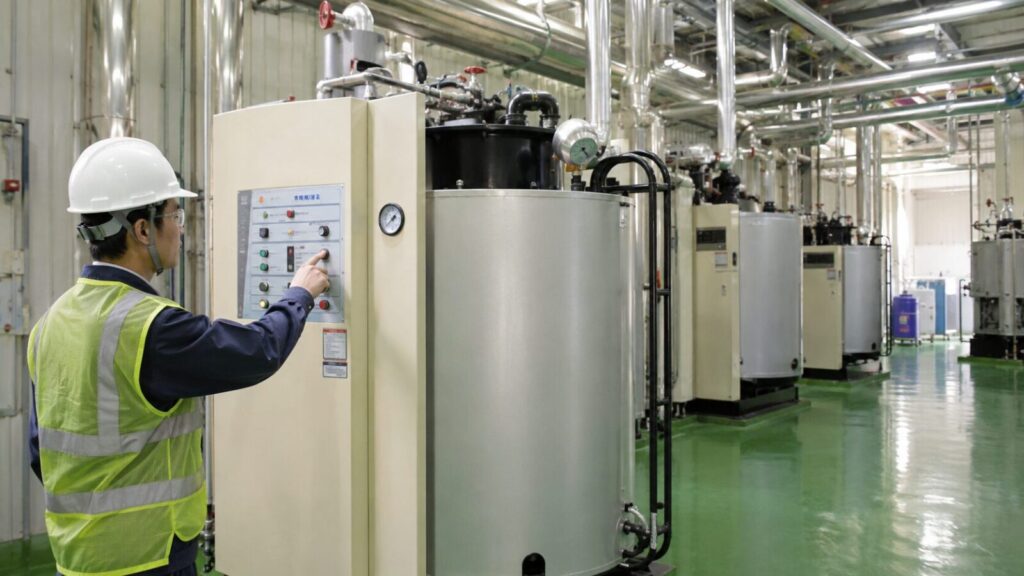
2.1 Inspection of Industrial Boiler Safety Conditions
This is always the first priority because an industrial boiler is pressure equipment that may present significant risks if not properly managed.
The auditor will assess both the actual condition of the equipment and the related legal documentation to ensure that the company complies with current regulations and has adequate safety control procedures in place.
Items Commonly Inspected
Equipment Condition
- Whether the boiler body shows signs of leakage or corrosion.
- Whether there is any deformation or structural damage.
- Whether the fuel supply system operates stably.
- Whether the water supply system operates normally.
- Whether there is any steam leakage at connection points.
Safety Devices
- Safety valves.
- Pressure gauges.
- Temperature gauges.
- Water level sensors.
- High-pressure warning devices.
- Emergency shutdown devices.
- Bottom blowdown valves.
These devices must be inspected periodically, calibrated in accordance with applicable requirements, and maintained in proper working condition.
Documents Commonly Requested by Auditors
- Pressure equipment inspection certificates.
- Installation acceptance records.
- Operating logs.
- Maintenance records.
- Component replacement records.
- Measurement instrument calibration records.
For many companies, the equipment may still be operating properly, but incomplete documentation or expired inspection certificates can result in Non-conformities (NCs) being recorded in the Factory Audit report.
Although an industrial electric boiler does not use combustion fuel, it must still fully comply with requirements related to safety devices, inspection, and operational management, just like other types of industrial steam boilers.
2.2 Steam Quality Inspection
This area is receiving increasing attention from international customers, particularly in the food, beverage, and pharmaceutical industries.
Not all steam is the same. A steam system may meet the required pressure but still contain excessive condensate or impurities that can directly affect product quality.
What Will the Auditor Evaluate?
Supplied Steam Quality
- Stable steam pressure.
- Appropriate temperature.
- Steam dryness.
- No excessive condensate.
- No impurities that could affect the product.
If steam is used directly for steaming, cooking, or sterilization, the auditor will evaluate contamination risk controls in greater detail.
Condensate Separation System
The auditor will inspect:
- Steam Separators.
- Steam Traps.
- Condensate discharge lines.
- Condensate tanks.
If the condensate separation system performs poorly, condensate may be carried along with the steam flow and cause:
- Reduced heat transfer efficiency.
- Equipment corrosion.
- Control valve damage.
- Inconsistent product quality.
Water Treatment Chemical Control
This area is commonly reviewed during GMP or FSSC 22000 audits.
The auditor will examine:
- Whether the chemicals used are appropriate.
- Whether there is a risk of product contamination.
- Whether control procedures are in place.
- Whether periodic monitoring records are maintained.
For food and beverage exporters, controlling Steam Quality is no longer merely a recommendation but has become an almost mandatory requirement.
2.3 Inspection of the Steam Distribution System
A high-efficiency industrial boiler will provide limited value if steam is lost throughout the distribution system. In many factories, heat losses from steam pipelines are greater than companies may expect. For this reason, auditors will closely inspect the entire steam distribution system.
Steam Pipelines
The assessment typically covers:
- Whether there are any steam leaks.
- Whether there are signs of corrosion.
- Whether there is any abnormal vibration.
- Whether the pipelines are arranged appropriately.
- Whether there are any points where condensate accumulates.
A properly designed and installed steam piping system not only reduces energy losses but also extends equipment service life.
Insulation Inspection
Damaged, detached, or deteriorated insulation can result in significant heat loss.
Auditors usually conduct direct visual inspections of:
- The overall condition of the insulation.
- Pipeline sections that are not insulated.
- Whether valves and flanges are adequately insulated.
These issues are easy to identify during an on-site inspection.
Steam Trap
Steam Traps are among the most frequently inspected components.
The auditor may ask the company:
- How often are Steam Traps inspected?
- Is there a complete Steam Trap inventory?
- Is there a periodic replacement plan?
- Is an annual Steam Trap Survey report available?
If a Steam Trap fails:
- Steam may be continuously lost.
- Fuel consumption may increase.
- Heat transfer performance may decline.
- Water Hammer may occur.
Many factories currently implement periodic Steam Trap Surveys to reduce energy losses and improve the efficiency of their entire industrial thermal equipment system.
>>> Related article: What Is a Steam Trap? Its Role in an Industrial Boiler System
Condensate Recovery
This is an important indicator of the system’s energy-saving performance.
The auditor will evaluate:
- The condensate recovery rate.
- Condensate quality.
- The condensate pumping system.
- Condensate storage tanks.
- Whether the condensate is reused.
Condensate recovery helps:
- Reduce feedwater consumption.
- Reduce the amount of water treatment chemicals required.
- Save fuel.
- Reduce heating time.
This is one of the energy-saving measures that many international corporations require their suppliers to implement.
2.4 Inspection of the Boiler Feedwater Treatment System
If the industrial boiler is considered the heart of the steam system, water quality can be viewed as the “lifeblood” that determines equipment service life. Industry experience shows that many boiler failures are associated with inadequate feedwater quality or improper water treatment processes. Therefore, auditors usually devote considerable attention to this area.
Parameters Commonly Reviewed
- Total hardness.
- pH.
- Electrical conductivity.
- TDS.
- Dissolved oxygen content.
- Silica, depending on the boiler type.
- Iron content.
In addition to the analysis results, the auditor will also evaluate:
- Sampling frequency.
- The person responsible.
- Measuring equipment.
- Record retention and storage.
Inspection of the Water Treatment System
This system typically includes:
- Water softening equipment.
- RO equipment, if installed.
- Multimedia filters.
- Chemical dosing systems.
- Softened water storage tanks.
- Online measuring instruments.
A properly designed and operated water treatment system helps:
- Reduce scale formation.
- Reduce corrosion.
- Improve heat transfer efficiency.
- Extend the service life of the industrial steam boiler.
- Reduce maintenance costs.
Blowdown
The auditor will also review the Blowdown procedure.
This includes bottom Blowdown, surface Blowdown, the Blowdown cycle, and implementation records.
Insufficient Blowdown can lead to TDS accumulation. Excessive Blowdown can waste water, chemicals, fuel, and energy.
Proper Blowdown control is one of the indicators used to assess the operating capabilities of the technical department.
2.5 Inspection of Operating Records and Maintenance Activities
This is an area that many companies underestimate, even though it accounts for a significant part of a Factory Audit.
The auditor’s perspective is clear: “A well-operated system must be demonstrated through data, not merely through verbal explanations.”
Therefore, even if the industrial boiler operates reliably, the company may still receive an unsatisfactory assessment if it lacks records demonstrating how the system has been managed.
Documents Commonly Requested
- Boiler operating SOPs.
- Emergency response SOPs.
- Daily operating logs.
- Periodic maintenance logs.
- Inspection records.
- Measurement instrument calibration records.
- Operator training records.
- Equipment inventory.
- Annual maintenance plans.
- Material and component replacement records.
3. Common Issues That Result in Non-conformities (NCs)
Not every Non-conformity (NC) results from a serious failure of the industrial boiler. In many cases, auditors record NCs because the company has not adequately controlled its documentation, maintenance activities, or operating management.
Below are the most common issues identified during Factory Audits of steam systems.
3.1 Incomplete Operating and Maintenance Records
Auditors always require companies to demonstrate their operating processes through documented records.
Common deficiencies include:
- Missing operating logs.
- Incomplete maintenance records.
- Equipment with expired inspection certificates.
- Missing measuring instrument calibration records.
- SOPs that have not been updated.
Recommendation: Standardize and digitize records to ensure they can be retrieved easily when required.
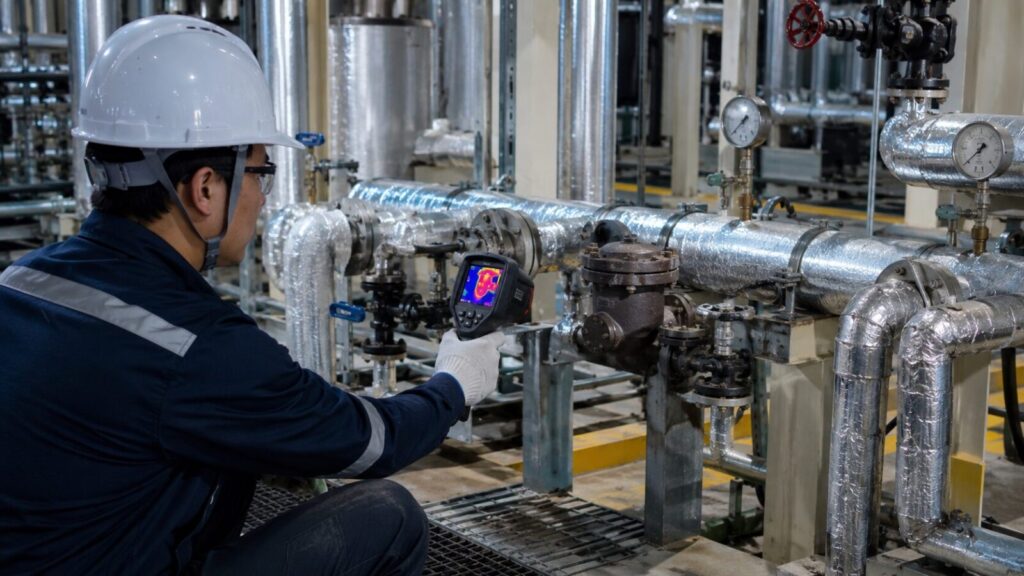
3.2 Energy Losses in the Steam System
Minor steam leaks may not immediately affect production, but they can indicate inadequate maintenance practices.
Auditors commonly inspect:
- Steam pipelines.
- Valves.
- Flanges.
- Steam Traps.
- Insulation.
Recommendation: Conduct periodic leak inspections and Steam Trap Surveys to reduce energy losses.
3.3 Inadequate Feedwater Quality Control
Feedwater that does not meet the required standards can cause scale formation, corrosion, and reduced industrial steam boiler efficiency.
The auditor will review:
- Hardness.
- pH.
- TDS.
- Water analysis records.
- Water treatment procedures.
Recommendation: Monitor water quality parameters periodically and maintain complete inspection records.
3.4 Lack of Performance Evaluation Data
Many companies have not yet monitored the operating efficiency of their steam systems using specific data.
The indicators that should be managed include:
- Boiler efficiency.
- Fuel consumption.
- Condensate recovery rate.
- Steam pressure.
- Blowdown rate.
These data help companies demonstrate continuous improvement activities during a Factory Audit.
Summary Table of Common Issues
| Issue | Impact | Recommendation |
| Missing operating records | High risk of receiving an NC | Standardize and digitize records |
| Equipment with expired inspection certificates | Safety risks | Conduct inspections at the required intervals |
| Steam leaks or damaged insulation | Higher energy costs | Perform periodic inspections and repairs |
| Failed Steam Traps | Reduced heat transfer efficiency | Conduct annual Steam Trap Surveys |
| Insufficient water quality control | Scale formation and corrosion | Perform periodic water analysis |
| Failure to monitor energy data | Difficulty demonstrating improvement | Establish operational KPIs |
4. What Should Companies Prepare Before a Factory Audit of the Steam System?
To reduce the risk of receiving NCs, companies should proactively review the system before the audit team arrives.
4.1 Prepare Complete Documentation
Ensure that the following documents are always available:
- Boiler inspection certificates.
- Operating logs.
- Maintenance records.
- Calibration records.
- Operating and emergency response SOPs.
- Employee training records.
4.2 Conduct a Physical Inspection of the Steam System
Carry out an internal inspection using the following checklist:
✔ No steam leaks.
✔ Safety valves operate normally.
✔ Pressure gauges remain within their calibration validity period.
✔ Steam Traps operate properly.
✔ Insulation remains intact.
✔ The water treatment system operates stably.
✔ Pipelines are clean and clearly identified.
4.3 Monitor Operating Data
Companies should record and analyze the following indicators:
- Steam pressure.
- Fuel consumption.
- Efficiency of the industrial boiler.
- Condensate recovery rate.
- Feedwater consumption.
- Energy costs.
Data-based management enables auditors to evaluate the company’s operating efficiency and improvement capabilities more easily.
4.4 Train the Operating Team
In addition to equipment, auditors also pay attention to the capabilities of operating personnel.
Companies should provide periodic training on:
- Safe operation.
- Emergency response.
- Water quality control.
- Energy saving.
- Record-keeping procedures.
A well-trained team helps maintain stable operation of the industrial thermal equipment system and improves the company’s ability to pass Factory Audits.
Conclusion
A Factory Audit does not only assess product quality but also comprehensively examines the steam system, including the industrial boiler, steam quality, water treatment, operating records, and maintenance activities. Proactively managing and optimizing the system not only helps companies reduce the risk of Non-conformities (NCs) but also improves operating efficiency, saves energy, and strengthens customer confidence.
If your company is considering investing in, upgrading, or optimizing an industrial boiler, industrial electric boiler, or steam system to meet Factory Audit requirements, please contact Maruse Engineering for a solution tailored to your industry, helping your factory operate safely, efficiently, and remain ready for every audit.